Susan
Thanks for the great customer service

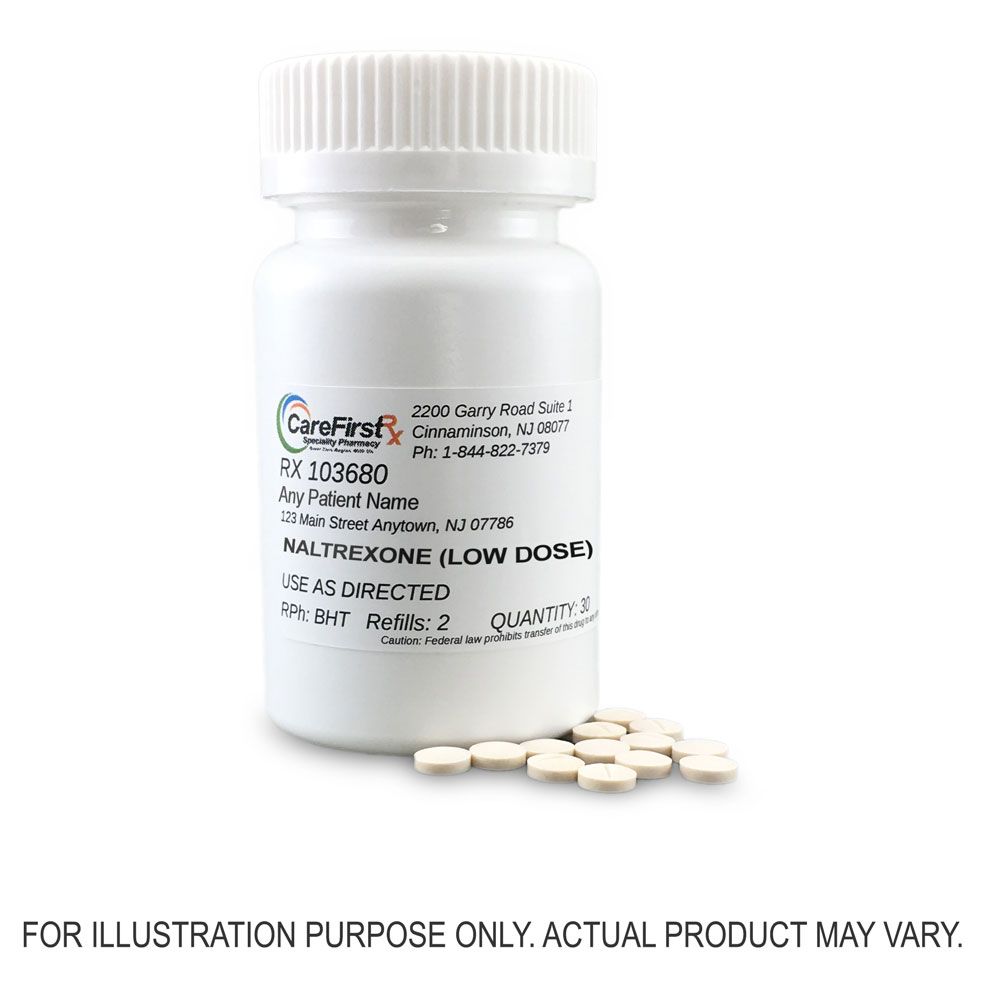
Low dose naltrexone may be beneficial for the treatment of various conditions including chronic pain and autoimmune illnesses. Naltrexone is typically used to treat opioid use disorder and alcohol abuse disorder. It is classified as an opioid antagonist blocking the effects of exogenously administered opioids. Naltrexone at low doses (0.5mg - 6mg) has been prescribed for its possible analgesia and anti-inflammatory effects, which have not been observed at higher doses.
Please Note: Due to market volatility, prices are subject to change. Please contact us for the most current pricing.
Select the action that best fits how you'd like us to handle the prescription.
To process your order we will require a prescription from you or your Prescriber. We will only compound and dispense upon receipt of a valid patient specific prescription.

Choose the option that best fits how you’d like to send scripts or connect with us.
Fax (800) 786-1405 or (844) 922-7379 and we’ll process it right away.
Call our pharmacists at (844) 822-7379 with prescription details.
Complete the prescriber form and we’ll follow up quickly.
[email protected] for questions, refills, or status updates.

We are a nationally accredited PCAB compounding pharmacy and a .Pharmacy verified website. A verified .Pharmacy website designation ensures our patients and prescribing partners that our website is verified and safe.
https://safe.pharmacy/buy-safely/?url=cfspharmacy.pharmacy
Actual product image may vary.
Naltrexone is typically used to treat opioid use disorder and alcohol abuse disorder. It is classified as an opioid antagonist blocking the effects of exogenously administered opioids. However, at low doses (0.5mg–6mg), oral naltrexone has been prescribed for its possible analgesia and anti-inflammatory effects, which have not been observed at higher doses. Low dose naltrexone may be beneficial for the treatment of various conditions including chronic pain and autoimmune illnesses.
Pronunciation
nal trek sown
Brand Names
Vivitrol, ReVia, APO-Naltrexone
Drug Class
Antidote, Opioid Antagonist
🔬 Mechanism of Action
As a pure opioid antagonist, naltrexone competes with opioid receptors and can displace opioid drugs from the receptors. Naltrexone antagonizes the effects of opioids with long-lasting effects. At low doses, this transient receptor blockade is believed to trigger an upregulation of endogenous opioid production, resulting in anti-inflammatory and analgesic effects.
📊 Administration & Dosing
⚠️ Drug Interactions
🚨 Adverse Effects
Common side effects:
• Nausea / vomiting
• Gastrointestinal pain / cramps
• Joint or muscle pain
• Difficulty sleeping
• Anxiety
• Headaches
Tell your doctor immediately if you experience: yellowing of the skin (jaundice), suicidal thoughts, symptoms of opioid withdrawal, or mild symptoms that do not go away.
🤰 Pregnancy, Breastfeeding & Pediatrics
📚 References
Naltrexone
Consult your prescriber.
Use the medication as prescribed by your doctor. The information provided is not intended to cover all possible uses. This information is generalized and not intended as specific medical advice. If you have questions about the use of your prescription, please contact your prescriber.
Troches and suppositories require refrigeration (ice packs) and will incur an extra charge of $19.95 per order.
6 reviews
We are a nationally accredited PCAB compounding pharmacy and a .Pharmacy verified website. A verified .Pharmacy website designation ensures our patients and prescribing partners that our website is verified and safe.
https://safe.pharmacy/buy-safely/?url=cfspharmacy.pharmacy
Actual product image may vary.
Naltrexone is typically used to treat opioid use disorder and alcohol abuse disorder. It is classified as an opioid antagonist blocking the effects of exogenously administered opioids. However, at low doses (0.5mg–6mg), oral naltrexone has been prescribed for its possible analgesia and anti-inflammatory effects, which have not been observed at higher doses. Low dose naltrexone may be beneficial for the treatment of various conditions including chronic pain and autoimmune illnesses.
Pronunciation
nal trek sown
Brand Names
Vivitrol, ReVia, APO-Naltrexone
Drug Class
Antidote, Opioid Antagonist
🔬 Mechanism of Action
As a pure opioid antagonist, naltrexone competes with opioid receptors and can displace opioid drugs from the receptors. Naltrexone antagonizes the effects of opioids with long-lasting effects. At low doses, this transient receptor blockade is believed to trigger an upregulation of endogenous opioid production, resulting in anti-inflammatory and analgesic effects.
📊 Administration & Dosing
⚠️ Drug Interactions
🚨 Adverse Effects
Common side effects:
• Nausea / vomiting
• Gastrointestinal pain / cramps
• Joint or muscle pain
• Difficulty sleeping
• Anxiety
• Headaches
Tell your doctor immediately if you experience: yellowing of the skin (jaundice), suicidal thoughts, symptoms of opioid withdrawal, or mild symptoms that do not go away.
🤰 Pregnancy, Breastfeeding & Pediatrics
📚 References
Naltrexone
Consult your prescriber.
Use the medication as prescribed by your doctor. The information provided is not intended to cover all possible uses. This information is generalized and not intended as specific medical advice. If you have questions about the use of your prescription, please contact your prescriber.
Troches and suppositories require refrigeration (ice packs) and will incur an extra charge of $19.95 per order.
6 reviews
Learn more about Low Dose Naltrexone from our pharmacy team.
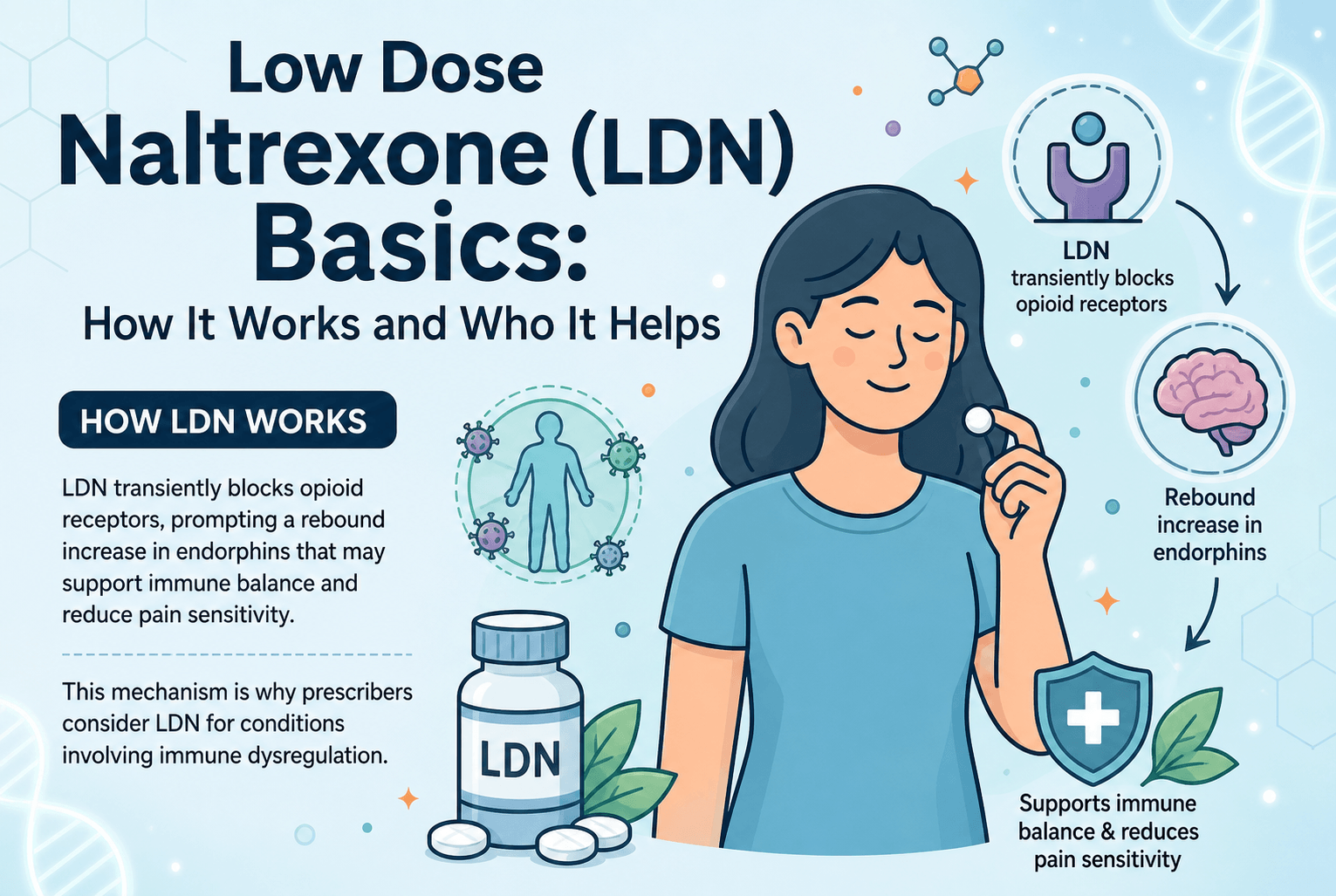
Explore how Low Dose Naltrexone (LDN) is compounded, why prescribers choose it, and what patients should know before starting therapy.
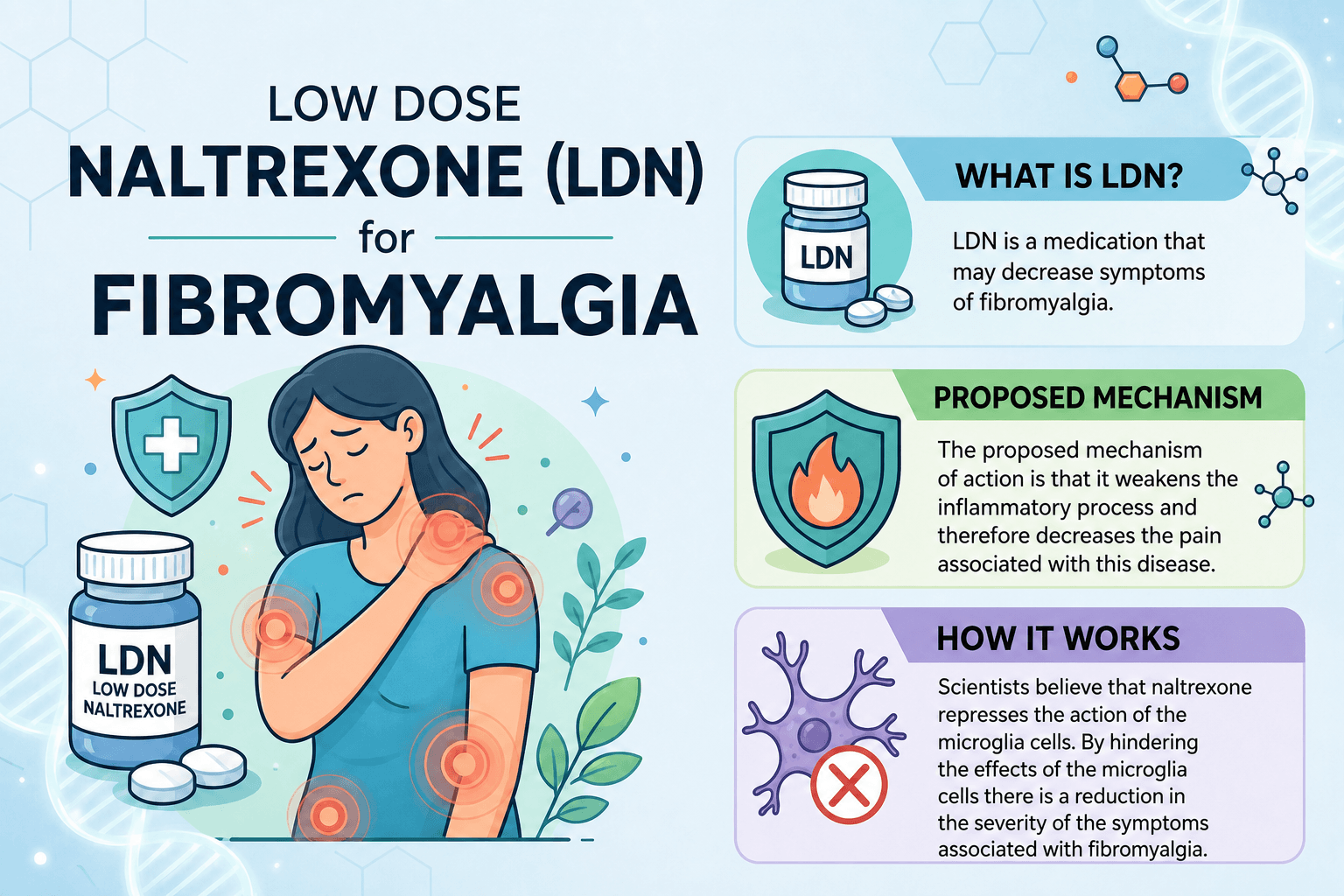
When you hear the word naltrexone your first instinct is most likely to think of this medication as something that is used to treat opioid or alcohol dependence. However, what if I were to tell you that patients suffering with fibromyalgia could use this medication to find relief and treat their pain? As strange as this may sound, breakthroughs in research in the recent years have actually shown that low dose naltrexone may potentially have a multitude of uses, including treating autoimmune diseases, pain and central nervous system disorders. This article will explore why low dose naltrexone (LDN) may be not be such a far-fetched idea for treating fibromyalgia.
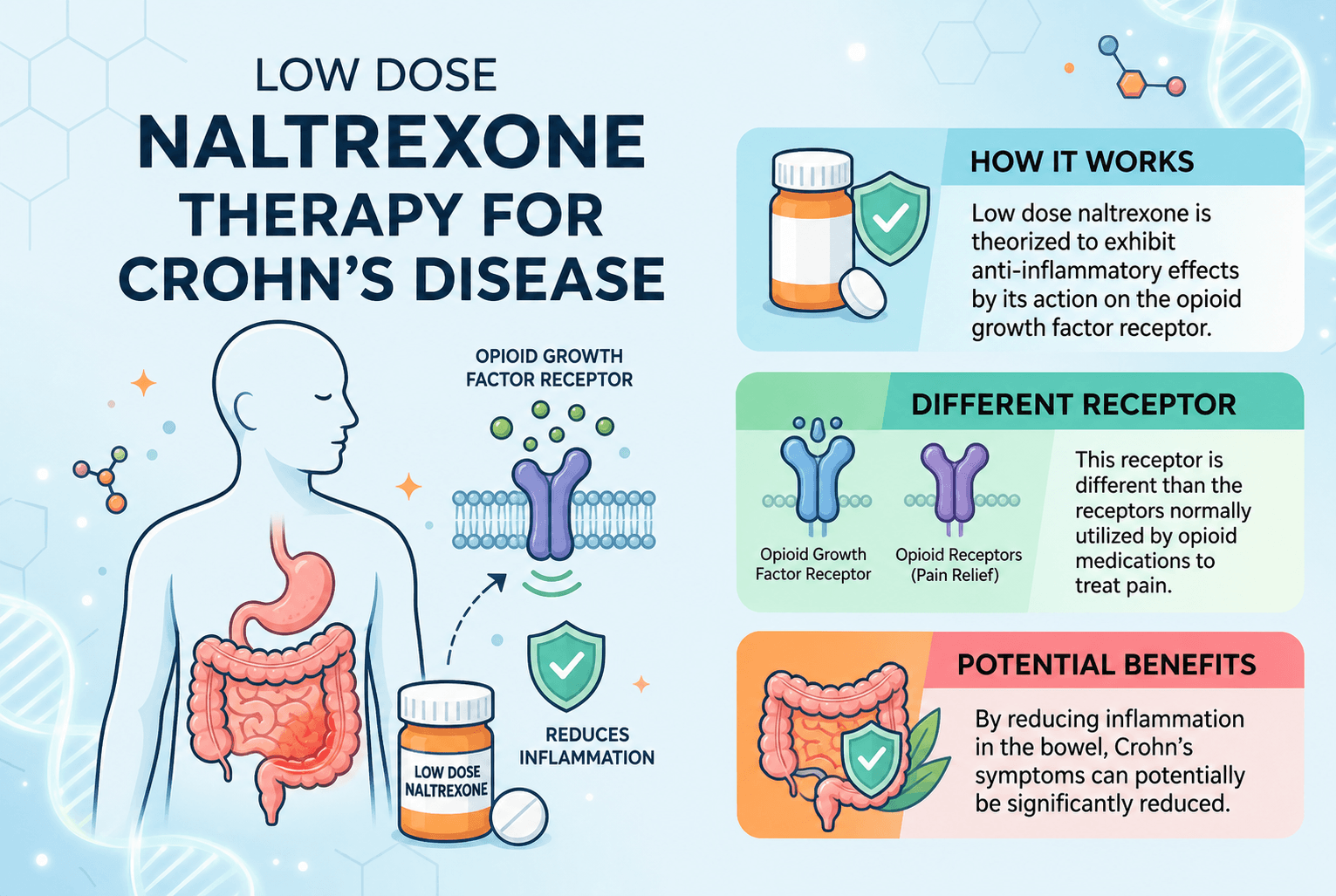
Crohn’s Disease is a debilitating form of chronic inflammatory bowel disease (IBD). It is estimated that 3 million people in the US alone have a form of IBD. There is currently no cure for Crohn’s which is usually characterized by frequent diarrhea, abdominal pain, unexplained weight loss, fatigue, and anemia. Normal therapies include immunosuppressive drugs including steroids, but 80% of patients will need surgical intervention within 20 years of diagnosis. There is evidence that low dose naltrexone can achieve symptom relief in some patients who have moderate symptoms despite normal therapies.